
Bridging Luxury and Value: The Frasers Group Playbook
From Sports Direct to Luxury Retail: how Frasers mastered Strategic Acquisitions and Market Reinvention.

Today, Frasers Group is a British fashion house and retail giant with a portfolio that bridges affordable sportswear and luxury brands. Notable names like Sports Direct, Flannels, and Everlast represent just a fraction of its expansive lineup of subsidiaries. The group has also strategically positioned itself with equity stakes in prominent companies like Hugo Boss and ASOS, highlighting how strategic acquisitions, operational reinvention, and branding can propel a company to greater heights in the value and premium retail sectors.
This is evident from the company’s 73% EBITDA growth over the past five years, highlighting its capacity to drive profitability through disciplined cost management and operational synergies realized from strategic acquisitions. Furthermore, according to FactSet, its broker rating as “Overweight” underscores strong investor confidence, with analysts forecasting the stock to outperform its peers and industry benchmarks.
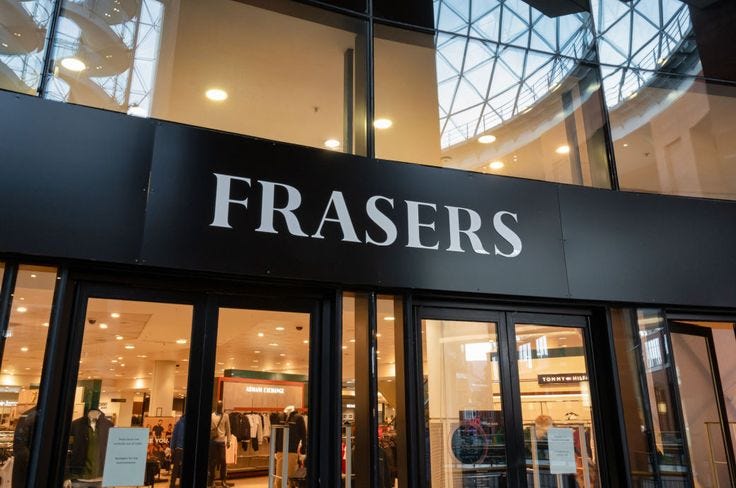
Founded in 1982 by Mike Ashley as Sports Direct, Frasers Group initially focused on affordable sportswear through a high-volume, low-cost model. However, with e-commerce and shifting consumer preferences, Frasers Group recognized the need to buy growth and prestige to enter new markets beyond value retail. In 2018, the company acquired House of Fraser, a premium department store chain that presented an opportunity to expand into upscale retail, elevate its market position, and appeal to aspirational consumers.
The Playbook:
The Frasers Group’s greatest strengths lie in its strategic foresight and financial discipline. The core component of the group’s transformation has been its bold approach to acquisitions by deploying capital effectively. This can be attributed to their strategic use of debt to fund acquisitions while maintaining manageable leverage ratios. This disciplined approach to balance sheet management ensures sufficient liquidity for future investments while safeguarding against potential market uncertainties.
For example, House of Fraser was acquired for £90 million, financed partly through the company’s revolving credit facilities and other debt instruments. The strategic rationale was House of Fraser offered brand recognition and real estate, allowing Frasers Group to acquire these distressed assets at a discounted price.
From Jack Wills to Missguided, the group’s track record of acquiring distressed brands and restructuring them to generate sustainable cash flows reflects its ability to recognize long-term value from underperforming assets. Post-acquisition, their focus on centralized operations, supply chain integration, and shared technology platforms achieve operational synergies and cost efficiencies, driving EBITDA growth. This strategy not only diversifies revenue streams but also mitigates downside risk.
Frasers Today:
Frasers Group is facing challenges as rising inflation and reduced consumer spending weigh on its premium and luxury segments. The company recently adjusted its profit guidance, forecasting adjusted pre-tax profits of £550 million to £600 million, down from the previously expected £575 million to £625 million. Additionally, its demotion from the FTSE 100 has intensified investor scrutiny as its shares have fallen 29% over the past 3 months.
However, the company remains resilient, leveraging its diversified portfolio and strategic acquisitions to navigate these challenges. Recently, Frasers Group increased its stake in Boohoo to approximately 28%, signaling confidence in the online fast-fashion retailer despite its recent struggles. Additionally, its equity stakes in prominent companies like Hugo Boss provide potential avenues for growth and collaboration, reinforcing Frasers Group’s long-term strategy to bridge value and luxury retail markets.